
Dental Bone Grafting Explained: Why You May Need It Before Implants

Missing teeth do more than leave a gap in your smile. Over time, the jawbone in that area can shrink because it is no longer being stimulated by chewing. If there is not enough strong bone to support a dental implant, a dentist may recommend bone grafting.
Dental bone grafting is a common procedure used to rebuild or strengthen the jawbone. It may sound complex, but the idea is simple: graft material is placed in an area where bone is thin, weak, or missing. Over time, your body uses this material as a scaffold to form new bone.
At Growing Smiles Whitefield Bangalore, patients are assessed carefully before implant treatment. Not every dental implant patient needs bone grafting. The decision depends on bone volume, bone quality, gum health, medical history, and the position of the missing tooth.
This article explains why bone grafting may be needed, how the procedure works, what recovery feels like, and what questions to ask before treatment.

Introduction to what dental bone grafting means
Dental bone grafting is a minor surgical procedure that helps rebuild bone in the jaw. A dentist or oral surgeon places bone graft material in a specific area where bone has been lost or where extra support is needed.
The graft material does not usually become the final bone on its own. Instead, it acts as a framework. Your body gradually replaces or integrates the material with new natural bone. This healing process takes time, often several months.
Bone grafting is often discussed before dental implants because implants need a stable foundation. An implant is placed into the jawbone, where it must fuse with the bone through a process called osseointegration. If the jawbone is too thin or soft, the implant may not have enough support.
Bone grafting may also be used after removing a tooth, around teeth affected by gum disease, or in areas where infection or injury has caused bone loss.
What causes bone loss in the jaw?
Jawbone loss can happen for several reasons. It is often gradual, so many people do not notice it until they need an implant or a dental X-ray reveals changes.
Missing teeth
Natural tooth roots stimulate the jawbone when you chew. When a tooth is removed and not replaced, that stimulation stops. The body may begin to resorb, or shrink, the bone in that area.
This is why a tooth that has been missing for many years may leave behind a narrow or shallow ridge of bone.
Gum disease
Advanced gum disease, also called periodontitis, can damage the bone that supports the teeth. When bacteria collect below the gum line, the body’s inflammatory response can lead to bone loss around the teeth.
If untreated, this may cause teeth to loosen and eventually be lost.
Tooth infections
A deep cavity, cracked tooth, or untreated root infection can spread into the surrounding bone. In some cases, the infection can damage the jawbone before the tooth is treated or removed.
Injury or trauma
Accidents, falls, sports injuries, or facial trauma can damage the teeth and supporting bone. Bone grafting may be used as part of reconstructive dental treatment after healing is underway.
Natural anatomy and ageing
Some people naturally have thinner bone in certain areas of the jaw. The upper back jaw can also be challenging because the maxillary sinus sits close to the roots of the upper molars. Ageing, long-term tooth loss, and certain health conditions may also affect bone volume.
Why dental bone grafting is needed
The main purpose of bone grafting is to create enough healthy bone for stable dental function and long-term treatment planning.
A dentist may recommend grafting to:
Support a dental implant
Implants need adequate bone height, width, and density for correct placement.
Preserve bone after tooth removal
A graft placed immediately after extraction can help reduce bone shrinkage.
Rebuild bone lost due to infection or gum disease
In selected cases, grafting can support periodontal or restorative treatment.
Improve the shape of the jaw ridge
A smoother and fuller ridge can improve the fit of future dental replacements.
Protect nearby structures
In the upper jaw, grafting may help create safe space between the implant area and the sinus.
The goal is not only to place an implant. It is to place it in a position that supports healthy chewing, gum contours, and long-term oral health.
When a dentist might recommend bone grafting
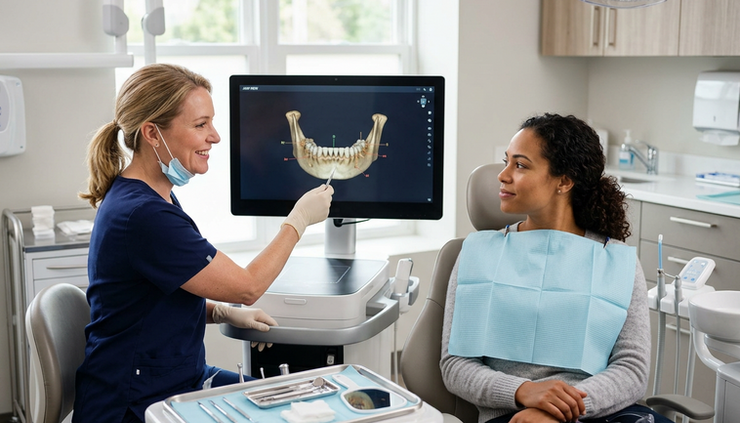
A dentist may suggest bone grafting after a clinical examination and imaging, such as dental X-rays or a CBCT scan. A CBCT scan gives a three-dimensional view of the jaw and helps measure bone more accurately.
Bone grafting may be recommended if:
A tooth has been missing for a long time
The jaw ridge is too thin or too short
A tooth extraction leaves a large socket
Gum disease has caused bone defects
An implant site is close to the sinus or nerve
Previous infection has damaged the bone
A denture has been worn for many years and the ridge has shrunk
Bone grafting is not automatic before implants. Some patients have enough bone for implant placement without any graft. Others may need only a small graft at the time of implant surgery. A few may need a separate grafting procedure months before the implant can be placed.
Different types of dental bone grafting procedures
There are several types of bone grafting procedures. The right option depends on where bone is missing, how much bone is needed, and the planned treatment.
Type of grafting procedure | When it may be used | What it involves |
Socket preservation | After tooth extraction | Graft material is placed into the empty socket to help maintain bone shape |
Ridge augmentation | When the jaw ridge is too thin or uneven | Bone graft material is added to rebuild the width or height of the ridge |
Sinus lift | For upper back teeth where the sinus is close | The sinus membrane is gently lifted and graft material is placed underneath |
Periodontal bone graft | Around teeth affected by gum disease | Graft material is placed near damaged tooth-supporting bone |
Block bone graft | When a larger amount of bone is missing | A small block of bone is fixed to the area needing reconstruction |
The graft material may come from different sources:
Autograft
Bone taken from another area of the patient’s own body or mouth.
Allograft
Processed donor bone from a human tissue bank.
Xenograft
Processed bone material from an animal source, commonly bovine.
Synthetic graft
Biocompatible material designed to support new bone formation.
All graft materials used in dentistry are processed and selected for safety and clinical suitability. Your dentist will explain which type is appropriate for your case.
How a dental bone graft procedure is performed
The exact steps vary based on the type of graft, but most dental bone grafting procedures follow a similar pattern.
Assessment and planning
The dentist checks the mouth, gums, bite, and missing tooth area. Imaging helps assess bone height, width, density, and nearby anatomy such as nerves and sinuses.
Medical history also matters. Conditions such as uncontrolled diabetes, smoking, certain medicines, and untreated gum disease can affect healing.
Anaesthesia and comfort
The procedure is usually done under local anaesthesia, so the area is numb. Some patients may also be offered sedation, depending on anxiety level, complexity, and medical suitability.
You may feel pressure or vibration, but you should not feel sharp pain during the procedure.
Site preparation
The dentist gently opens the gum tissue to access the bone. If the graft is being placed after extraction, the socket is cleaned carefully.
Any infected tissue or debris is removed before graft placement.
Placement of graft material
The graft material is placed in the planned area. A protective membrane may be used to hold the graft in position and guide healing. In some cases, small screws or pins are used, especially for larger grafts.
Closing the area
The gum tissue is repositioned and closed with stitches. The dentist then gives aftercare instructions and may prescribe medicines such as pain relief, antibiotics, or an antiseptic mouth rinse when needed.
Healing and review
The graft needs time to integrate with the body. The dentist will schedule follow-up visits to check healing. If the graft is part of implant planning, implant placement may happen later once enough bone has formed.
What to expect during recovery
Recovery after bone grafting is usually manageable, but it is normal to have some discomfort.
For the first few days, mild to moderate pain, swelling, bruising, or slight bleeding can occur. These symptoms usually improve gradually. Swelling often peaks around the second or third day and then starts to reduce.
Healing inside the bone takes longer than surface healing. The gum may feel better within one to two weeks, but the graft itself may take several months to mature. The timeline depends on the size of the graft, the location, your general health, and how well aftercare instructions are followed.
Call your dentist if you notice:
Pain that worsens after a few days
Heavy or continuous bleeding
Pus, bad taste, or increasing swelling
Fever or feeling unwell
Graft particles coming out in large amounts
Stitches opening or the wound not healing
A few small graft particles in the mouth can be normal in some cases, but your dentist should guide you on what is expected.
Benefits and possible risks of bone grafting
Bone grafting can be an important step in rebuilding oral health, but like any surgical procedure, it has benefits and risks.
Benefits
Potential benefits include:
Better support for dental implants
Improved bone volume in thin or weak areas
Reduced bone shrinkage after extraction
Improved jaw shape for future tooth replacement
Better long-term planning for function and appearance
For many patients, grafting can make implant treatment possible when there was not enough bone before.
Possible risks
Possible risks include:
Pain, swelling, or bruising
Infection at the graft site
Delayed healing
Graft exposure through the gum
Partial or complete graft failure
Sinus-related issues in upper jaw procedures
Numbness or nerve irritation in rare cases
Need for additional treatment
No dental procedure can be guaranteed. Success depends on the condition of the bone and gums, the type of graft, surgical technique, oral hygiene, general health, and habits such as smoking.
A careful diagnosis helps reduce risk, but it cannot remove risk completely.
How to care for your mouth after the procedure
Good aftercare supports healing and lowers the chance of complications. Follow the specific instructions given by your dentist, as advice may vary based on the procedure.
Common aftercare steps include:
Bite gently on gauze if advised
Use an ice pack on the outside of the face during the first day if recommended
Take prescribed medicines exactly as directed
Avoid rinsing vigorously for the first 24 hours
Do not spit forcefully, smoke, or use a straw soon after surgery
Eat soft foods such as curd rice, dal, khichdi, idli, soft fruits, or soup once it is not too hot
Avoid hard, crunchy, spicy, or very hot foods for a few days
Brush carefully, but avoid disturbing the surgical site
Use any prescribed mouth rinse as directed
Attend follow-up appointments
Smoking can slow healing and increase the risk of graft problems. If you smoke, speak with your dentist before surgery about reducing or stopping during the healing phase.
Frequently Asked Questions
Is dental bone grafting painful?
The procedure is done under local anaesthesia, so the area should be numb during treatment. You may feel pressure but not sharp pain. After the anaesthesia wears off, soreness and swelling are common for a few days. Pain relief medicines usually help manage this.
How long does a dental bone graft take to heal?
The gum tissue may heal in one to two weeks, but the bone underneath takes longer. Many grafts need several months to mature before an implant can be placed. Larger grafts and sinus lifts may need more healing time.
Is bone grafting always needed before dental implants?
No. Many patients have enough bone for implants without grafting. A dentist recommends bone grafting only when the bone is not sufficient in volume, shape, or quality for safe and stable implant placement.
What happens if you do not get a dental bone graft?
If a graft has been recommended and not done, there may not be enough bone to support an implant properly. This could affect implant position, stability, gum appearance, or long-term success. In some cases, implant treatment may not be possible without rebuilding the bone first.
How successful is dental bone grafting?
Bone grafting is widely used in dental treatment and often heals well when planned properly. Success depends on oral hygiene, gum health, medical conditions, smoking, graft size, and aftercare. Your dentist can explain the expected outcome based on your individual case.
Can the body reject a bone graft?
Dental bone grafts are not usually “rejected” in the same way as an organ transplant. Problems are more often related to infection, movement of the graft, poor blood supply, smoking, or delayed healing. If a graft does not integrate well, your dentist may recommend further treatment.

A personalised evaluation is the best next step
Dental bone grafting can sound intimidating at first, but it is often a planned and controlled way to rebuild lost bone. For patients who need implants, it can create a stronger foundation. For others, it may help preserve bone after extraction or repair damage from disease or infection.
The key point is that treatment is individual. Not every implant patient needs a bone graft, and the decision should be based on a proper examination, imaging, and oral health assessment.
If you have been advised to undergo bone grafting or want to understand your treatment options, consult the dental team at Growing Smiles Whitefield Bangalore for a personalised evaluation. This article is for general information only and does not replace professional dental advice.


Comments